| Institute of Materials Processing | ![]() |
|
IMP HOME |
STAFF |
CAPABILITIES |
|
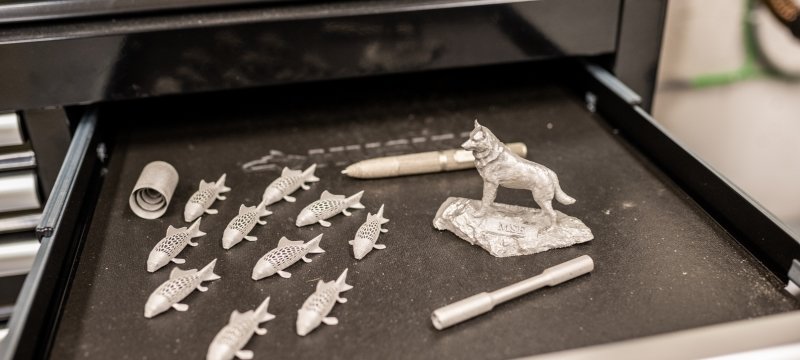
1 CASTCON: A COMBINATION OF CASTING, FORGING, P/M, BONDING AND COATING
TO PRODUCE HIGH PERFORMANCE COMPONENTS
Huang, X., J.Y. Hwang, Institute of Materials Processing, Michigan Technological University
X. Song, Bindy Company, Houghton, MI
A new manufacturing approach which combines casting, forging, P/M, bonding, and coating has
been developed to produce high performance components. The features of the process, named
CastCon for cast and consolidation, include shape forming flexibility, the ability to produce fully
dense parts with fine microstructure, and the capability of powder to powder, solid to solid and
powder to solid bonding, , as well as powder coating. The process is suitable to a wide variety of
materials and can be used for single piece prototyping or high volume production. This process
is briefly introduced in this paper. CastCon components of stainless steel, tool steel, carbon
steel, copper, aluminum, cobalt, nickel, and titanium alloys are demonstrate. Microstructure and
mechanical properties of CastCon specimens are presented.
Published in the Proceedings if the 5th International Conference on Advanced Particulate
Materials & Processes, April 7-9, 1997, West Palm Beach, Florida
2 SAND RECLAMATION FOR A STEEL FOUNDRY
Hwang, J.Y., Liu, X., Institute of Materials Processing, Michigan Technological University Kestling, B., Michigan Department of Natural Resources
To reclaim sand is an undeniable trend for foundry operations. However, determining the
appropriate reclamation system is frequently difficult because of insufficient information. This
study investigates factors that are critical for steel foundry operations. Environmental , technical
and economic concerns are addressed. Topics include the separation of chromite sand from silica
sand, environmental requirements, binder selection, thermal reclamation temperature, and the
economic impacts of these issues.
Experimental results show that chromite sand can be separated from silica sand and both
chromite and silica sand can be recycled. Binder has a very strong effect on the properties of the
reclaimed sand. The environmental effects of different binders were studied and it was found that
lead containing binder could cause problems for sand reclamation. The lead-free binder produced
much better performance than the lead-containing binder did, particularly regarding the tensile
strength of reclaimed sands.
The effect of temperature on thermal reclamation is discussed. High reclamation temperature
may not improve the performance of reclaimed sand, especially chromite sand. The properties of
reclaimed sand are evaluated to determine the effects of residual binder, fines generated during
reclamation processes and metal or metal oxide accumulated on sand surfaces.
AFS Transactions 93-57 807
3 RECLAMATION OF FOUNDRY SAND USING MICROWAVE SELECTIVE HEATING
Hwang, J.Y., Liu, X., Hozeska, T.J. Institute of Materials Processing, Michigan Technological University
Kestling, B., Michigan Department of Natural Resources
Microwave heating is an attractive alternative to conventional heating methods because heat is
generated directly within the microwave-absorbing materials. It has the potential to be used for
selective heating and removal of some specified components from a materials mixture. This
investigation was undertaken to study the technical feasibility of selective heating and burning of
organic binders for foundry sand reclamation.
Microwave heating characteristics of silica sand mixed with different organic binders and used
for foundry sand were investigated. The oil urethane binder in the sand-binder mixture
significantly improved the microwave heating of silica sand. The used foundry sand could be
heated by microwave irradiation very quickly, due to the presence of residual carbon, chromite
sand and residual binder in the used foundry sand.
Two stages of microwave selective heating---microscopic selective heating and macroscopic
heterogenous heating---were observed. The effect of the two stages on applying microwave
selective heating for sand reclamation is discussed. The properties of sands reclaimed by
conventional thermal methods and microwave heating were examined and compared. The
advantages and difficulties of applying microwave selective heating in reclamation of used
foundry sand were discussed.
AFS Transactions 94-98 789
4 FINE COAL CLEANING WITH ADVANCED MAGNETIC ENHANCEMENT
TECHNOLOGY
Hwang, J.Y., Institute of Materials Processing, Michigan Technological University
An effective magnetic separation for coal cleaning requires selective magnetic enhancement of
coal associated minerals. Thus study shows that the enhancement can be achieved with a recently
developed magnetic reagent technology. Ash-forming mineral matter pyritic sulfur, and possibly
organic sulfur can all be significantly reduced with this approach. The fundamentals of the
magnetic reagent technology and the coal cleaning results are described and discussed.
Published in the Proceedings of the 6th Annual Coal Preparation, Utilization, and Environmental
Control Contractors Conference, August 6-9, 1990, Pittsburgh, PA, USDOE, Pittsburgh Energy
Technology Center.
5 ULTRAFINE PARTICLE PROCESSING: A METHOD FOR ALUNITE BENEFICIATION
Hwang, J.Y. Institute of Materials Processing, Michigan Technological University Kullerud, G., Friedlaender, F.J. Purdue Uinv. Takayasu, M. MIT, Cambridge
Alunite has been used as raw material for producing alumina and potassium sulfate fertilizer in
Russia for many years. In the United States, this mineral has not been commercially processed
though reserves of 5 to 10billion tons of alunite ore have been estimated. Major constituents of
these ores are quartz and alunite. The minerals are finely intergrown and liberation occurs
below 10mg. Adequate separation techniques for such ultrafine particles have not been
developed. A new method for the beneficiation of alunite ore is propose in this study. This
method utilizes a small amount of fine magnetite upon which liberated quartz is selectively
flocculated. The co-flocculated magnetite and quartz are then separated from the alunite in a
high gradient magnetic separator. Clean products, e.g. an alunite concentrate of 90% grade with
80% recovery, has been obtained from Utah ore. Techniques for selective cop-flocculation of
magnetite and quartz, separation of the carried quartz, and recovery of the magnetite after
separation are discussed.
Society of Mining Engineers of AIME Transactions Volume 280-1961
6 SYNTHESIZING MULLITE FROM BENEFICIATED FLY ASH
Hwang, J.Y., Huang, X., Hein, A. Institute of Materials Processing, Michigan Technological University
In the United States approximately 50 million tons of fly ash are generated by electric utilities
annually. The current consumption rate for fly ash materials is less than 20% because most fly
ash materials do not meet market specifications and the quality of the ash in inconsistent. A
beneficiation process that produces quality-controlled fly ash components has been developed .
The synthesis of mullite as a refractory material is one of industrial application for the silicate
sphere component from the beneficiated fly ash. As-received (untreated) fly ash did not produce
a usable mullite refractory. This article discusses the fly ash beneficiation process and mullite
synthesis.
JOM May 1994
7 PROCESSED LOW NO2 FLY ASH AS A FILLER IN PLASTICS
Huang, X., Hwang, J.Y., Gillis, J.M. Institute of Materials Processing, Michigan Technological University
Fly ash generated from low NO2 burners at the American Electric Power's Glen Lyn facility was
beneficiated to remove residual carbon, magnetic particles, and cenospheres. The clean fly ash
had a mean particle size of about 30 microns which is coarser than a typical commercial fillers
used in plastics. To obtain a finer sized fly ash, air classification was used to separate the clean
fly ash into its coarse and fine fractions. The resulting fine fraction had a mean particle size of
4.13 microns and accounted for 16.7wt of the total clean ash. The brightness of the clean ash
was also less than that of typical commercial fillers and efforts to improve the brightness proved
unsuccessful. The clean ash was then coated with a silane coupling agent and then added to
polypropylene, low density polyethylene, and high density polyethelene at various levels. These
mixtures were in turn used to make tensile test specimens by injection molding . For comparison
, a commercial CaCO3 filler was also tested under the same conditions. The mechanical
properties of these specimens were determined and the results show that the polymers containing
fly ash as a filler have equivalent properties to those same polymers when a commercial fillers is
used in most cases.
Published in Proceedings: 12th International Symposium on Coal Combustion By-Product (CCB)
Management and Use, January26-30, 1997, Orlando, Florida
8 CLEAN FLY ASH AS FILLERS IN PLASTICS
Huang, X., Hwang, J.Y., Tieder, R. Institute of Materials Processing, Michigan Technological University
Mineral fillers are widely used in plastic products to improve performance and decrease costs.
The total consumption of fillers in 1993 reached 7,733 million pounds, with a growth rate of
5.8% from1988 to 1993. Fly ash, a complex mixture of spherical aluminosilicate powder, is a
potential filler material. Furthermore, fly ash may offer an attractive cost advantage over current
commercial fillers because on average it has negative value. The use of as-received fly ash as
collected at coal burning power plants as a filler to replace commercial fillers such as CaCO3
,talc, and glass spheres has been evaluated previously. These studies concluded fly ash could
replace commercial fillers in PVC, polypropylene, polyethylene, and nylon
with no loss of
mechanical properties. However, a survey of plastics manufacturers indicates a reluctance to use
fly ash as a filler because of its low brightness, improper pH and presence of broken cenospheres.
Beneficiation of as-received fly ash is a feasible way to remove residual carbon, cenospheres, and
magnetic particles, thereby improving its acceptance by the plastics industry. The objective of
the research discussed in this paper was to evaluate the use of cleaned ash as a plastic filler. The
research also evaluated grinding of the cleaned ash to make physical characteristics more similar
to those of the widely used commercial mineral fillers.
Published in Proceedings: 11th International Symposium on Use and Management of Coal
Combustion By-Product (CCBs), January15-19, 1995, Orlando, Florida
9 REFRACTORY MATERIAL PRODUCED FROM BENEFICIATED FLY ASH
Hwang, J.Y., Huang, X., Tieder, R. and Hein, A. Institute of Materials Processing, Michigan Technological University
Fly ash has a chemical composition similar to that of clay consisting of aluminosilicate with
impurities. Fly ash, like clay, is also a powdery material and is potentially capable of replacing
part of clay in many clay products. The use of fly ash in ceramic products, such as bricks and
ceramic tile has been tried for years. Previous work focused on the use of as-received fly ash in
low value applications. Although beneficiation of fly ash adds processing costs to the use of ash,
cleaning may make it more suitable for use in the manufacture of more advanced materials.
Mullite is such an advanced ceramic material with the potential for synthesis from fly ash and
alumina powder.
1995
10 BENEFICIATION PROCESS FOR FLY ASH AND THE UTILIZATION OF CLEANED FLY
ASH FOR CONCRETE APPLICATION
Hwang, J.Y., Liu, X. Institute of Materials Processing, Michigan Technological University Zimmer, F.V. Detroit Edison Thiruvengadam, T.R. Consumers Power Patzias, T. Holnam, Inc.
A fly ash beneficiation process technology was developed at Michigan Technological
University. This technology allows carbon, cenospheres, and iron spheres to be removed from
as-received fly ash. The silicate sphere components obtained from as-received ash is termed
clean fly ash.
Three different ash samples: a Class F ash, a Class C ash and a mixture of Class F ash (80%) and
Class C ash (20%) were investigated. The high LOI values for the Class F ash and the mixture of
Class F ash and Class C ash limit their application in concrete. The Class C ash has high sulfur
content and soluble salts which may limit its high volume applications. The fly ash beneficiation
technology was applied on these three ash samples on a pilot scale.
The properties of cleaned ash samples from separation processes were obtained and compared
with as-received ash samples. Both cleaned and as-received ash samples were used to replace 20
and 30 wt% of cement in 35S concrete, Air content, slump, and unit weight of fresh concrete
containing cleaned ash were determined along with the compressive strengths at different ages.
Proceedings: 11th International Symposium on Use and Management of Coal Combustion Bt-Products (CCBs), January 15-19, 1995, Orlando, Florida
11
CHARACTERIZATION OF RECYCLABLE COMPONENTS IN FLY ASH TO PRODUCE
MARKETABLE PRODUCTS
Kramer, R., Hwang, J.Y., Huang, X., Hozeska, T. Institute of Materials Processing, Michigan Technological University
Fly Ash, a by-product of coal burning power plants, poses a major problem for the utility industry
since most fly ash must be land-filled. These quantities may represent as much as 20% of the
total material going into landfills. A major problem with fly ash utilization is that although the
ash consists of usable components, ash composition can vary depending on the types of coal
burned and plant operating conditions. Ash is first characterized using SEM, image analysis, and
chemical methods. Processing techniques were developed to separate ash into various
components including cenospheres, magnetic spheres, carbon, and clean ash. These products are
again evaluated for various utilizations before being used to produce valuable products such as
mullite, activated carbon, fillers in plastics, and concrete.
Extraction and Processing for the Treatment and Minimization of Wastes, Hager, J., Hansen, B.,
Imrie, W., Pusaton, J. and Ramachandran, V., Minerals, Metals and Materials Society, 1993
12
UNBURNED CARBON FROM FLY ASH - A HIDDEN TREASURE
Hwang, J.Y. Institute of Materials Processing, Michigan Technological University
The Institute of Materials Processing at Michigan Technological University has developed a
beneficiation technology that recovers unburned carbon from fly ash. This work was supported in
part by the U.S. DOE under contract no. DE-FC21-94MC31175. The patented technology is
licensed to Mineral Resources Technology (MRT) of Atlanta, Georgia. Carbon removal benefits
fly ash utilization by producing low-carbon quality controlled fly ash, thus promoting ash use in
a variety of markets, such as cement/concrete, plastics, and refractories. The recovered carbon
can be used as a sorbant in applications that use activated carbon. Tests have shown recovered
carbon has better sorbability than commercial activated carbon in applications such as adsorption
of mercury from flue gas streams for emission control. Other carbon uses are being developed.
Proceedings: Third Annual Conference on Unburned Carbon on Utility Fly Ash, 1997, FETC
Publications
13
UTILIZATION OF BENEFICIATED LOW NOx FLY ASH IN CONCRETE AND CONCRETE
BLOCK
Song, X.M, Hwang, J.Y.,Liu, X. Institute of Materials Processing, Michigan Technological University
A Class F ash from low NOx burner of American Electric Power Company (AEP) has average
LOI value of 21.7% much higher than the ASTM 618 limit for concrete use. The as-received ash
was beneficiated to separate carbon, cenospheres, and magnetic materials that make up about
25% of the total weight of the ash. The remaining 75% termed cleaned AEP ash is mainly
composed of silicate spheres and a few irregular solids. After separation, the average LOI of the
cleaned ash was reduced to 0.4%. Both as-received and cleaned fly ash were used to partially
replace cement in manufacturing concrete and concrete blocks. For the
concrete containing
cleaned ash the air content averaged 6.3% (in a 3.5 ksi specific design strength) in comparison to
7% in concrete made without the fly ash and 1.9% made with as-received ash. To obtain the
desired slump value, the water to cementitious materials ratio decreases as the cleaned fly ash
replacing cement increases; when as-received ash is used, the ratio increases. The concrete
formed with both as-received and cleaned fly ash replacing up to 30% of the cement for a 3.5 ksi
specific design strength meets compressive strength specifications. The effects of LOI content
on concrete workability and strength and the effect of the amount of cement replaced by fly ash
in a varied specific strength design are discussed. Concrete blocks containing as-received or
cleaned fly ash were manufactured and the quality of the block was analyzed.
Published in Proceedings: 12th International Symposium on Coal Combustion By-Product (CCB)
Management and Use, January26-30, 1997, Orlando, Florida
14
EFFECT OF FLY ASH BENEFICIATION PROCESS ON QUALITY OF PROPOSED
BOTTOM ASH, ESP FLY ASH, DUST COLLECTOR FLY ASH, THEIR MIXTURES, AND
PERFORMANCE OF CONCRETE CONTAINING THESE PROCESSED ASH SAMPLES
Liu, X., Hwang, J.Y. Institute of Materials Processing, Michigan Technological University Curtis, M.O., Clishe, A.C. Upper Peninsula Power Company
Three ash components: bottom ash, electrostatic precipitator ash (ESP fly ash), dust collector ash,
and the mixture of these ash components forma power plant were investigated. Each ash
component had different LOI values: the LOI was 5.1% for bottom ash, 6.1% for precipitator ash
and 29.3% for dust collector ash.
The fly ash beneficiation process was applied to the individual ash components and the mixture
of these ash components. Carbon, magnetic spheres, and oversize particles were removed from
as-received ash components and their mixture. The processed ash, cleaned ash, from each
component and its mixture were used to replace 20% of the cement in 35S and 30S concrete,
which are produced routinely by local concrete producers.
The composition and LOI analysis for as-received and cleaned ash components were analyzed
and summarized. The air content, slump, and unit weights of fresh concrete containing clean ash
and its compressive strengths at different ages (7 day, 28 day, 91 day) were determined.
Since ash produced in many industrial boilers will have a wide range of
LOI values, e.g., 5% to
30%, a successful utilization in concrete of cleaned ash obtained from the separation of these ash
components provided baseline information for processing and utilizing different fly ash by-products.
Proceedings: 11th International Symposium on Use and Management of Coal Combustion By-Products (CCBs), January 15-19, 1995, Orlando, Florida
15
SEPARATION OF CHROMITE AND SILICA FROM RECLAIMED SAND USING
PHYSICAL CONCENTRATION PROCESSES
Liu, X., Hwang, J.Y., Hein, A.M., Kramer, R.I. Institute of Materials Processing, Michigan Technological University
Sands are utilized to make molds for metal castings in the foundry industry. Approximately a half
ton of sand is disposed of for each ton of metal cast in the country. The purpose of this
investigation was to study and develop a process to separate chromite sand and silica from the
reclaimed sands for a steel foundry. Physical separations were utilized to yield silica and
chromite sands with desirable molding properties. Several different separation methods,
including electrostatic, magnetic, and various gravitational approaches were examined.
Experimental results are presented.
A method was developed to separate chromite sands from silica sand after mechanical or
thermal reclamation. The reclaimed sands are pressed through a rare earth magnetic separator to
separate chromite sand and magnetic impurities from non0-magnetic silica sand. Chromite sand
can be recovered from magnetic silica sand or magnetic impurities very effectively using a wet
concentrating table. The applications of the separation methods are discussed.
Process Mineralogy XIII: Applications to Beneficiation Problems, Pyrometallurgical Products,
Advanced Mineralogical Techniques, Precious Metals, Environmental Concerns, Ceramic
Materials, Hydrometallurgy and Minerals Exploration, Edited by R.D. Hagni, The Minerals,
Metals and Materials Society, 1995
16 PHYSICAL CONCENTRATION PROCESSES FOR RECLAIMING FOUNDRY SANDS
Hwang, J.Y., Liu, X., Kramer, R.I., Hein, A.M., Wu, T. Institute of Materials Processing, Michigan Technological University
Sands are utilized to make molds for metal castings in the foundry industry. Approximately a
half ton of sand is disposed of for each ton of metal cast in this country. In Michigan annual sand
disposal amounts to about one million tons. A process has been developed in this study to
reclaim sands from a steel foundry. Physical separations are utilized in conjunction with other
operations(such as the removal of binder, metal, sprues, washes, etc.) to yield silica and chromite
sands with desirable molding properties. Several different separation methods including
electrostatic, magnetic, and various gravitational approaches have been examined. Experimental
results are presented. The applicabilities of these separation methods are discussed.
Society for Mining, Metallurgy, and Exploration Preprint 92-228, SME Annual Meeting,
February 24-27, 1992
17 IDENTIFICATION OF LOW CONCENTRATION PHOSPHATE SPECIES IN IRON ORE
USING SEM/EDS/IMAGE ANALYSIS
Kramer, R.I., Hwang, J.Y., Hein, A.M. Institute of Materials Processing, Michigan Technological University
A bulk compositional chemical analysis often provides incomplete information to help the
mineral processor when faced with the problem of removing troublesome contaminants in low
concentrations. Michigan Technological University has developed a unique approach for
addressing this problem. A combination of Scanning Electron Microscopy (SEM), Energy
Dispensive Spectroscopy (EDS), and image analysis was successfully used to characterize the
species responsible for phosphorus contamination of less than .05 weight percent in iron ore. An
automated routine acquired the chemical signature of each particle on a backscattered electron
image. The few particles containing phosphorus were identified from the hundreds of particles
examined and the phosphate phases present were easily characterized.
Process Mineralogy XII: Applications to Beneficiation Problems, Pyrometallurgical Products,
Advanced Mineralogical Techniques, Precious Metals, Environmental Concerns, Ceramic
Materials, Hydrometallurgy and Minerals Exploration, Edited by W. Petruk and A.R. Rule, The
Minerals, Metals and Materials Society, 1994
18 MINERALOGICAL EVALUATION OF THE EFFECT OF RECLAMATION PROCESSING
VARIABLES ON THE CHEMISTRY OF FOUNDRY SANDS
Kramer, Liu, X., R.I., Hwang, J.Y., Hein, A.M., Wang, G. Institute of Materials Processing, Michigan Technological University
During foundry sand reclamation process development, molds from reclaimed chromite sand
showed a rapid decline in tensile strength during thermal cycling tests. Because this
characteristic could limit reuse of the chromite sand in the foundry, the sand was examined in
detail. Scanning electron microscope, x-ray mapping, magnetic susceptibility and x-ray
diffraction were utilized to evaluate processed chromite sand. It was found that process variables
such as binder composition, reclamation temperature, and processing methods had a significant
effect on the chromite particle surface. X-ray diffraction indicated a crystallographic change in
the processed sands. Magnetic susceptibility also increased after processing. Diffusion of iron to
the particle surface and increased surface roughness were identified as potential causes of the
decreased tensile strength in the molds.
Process Mineralogy XII: Applications to Beneficiation Problems, Pyrometallurgical Products,
Advanced Mineralogical Techniques, Precious Metals, Environmental Concerns, Ceramic
Materials, Hydrometallurgy and Minerals Exploration, Edited by W. Petruk and A.R. Rule, The
Minerals, Metals and Materials Society, 1994
19 PROPERTIES OF MULLITE SYNTHESIZED FROM FLY ASH AND ALUMINA MIXTURE
Huang, X., Hwang, J.Y., Mutsuddy, B.C. Institute of Materials Processing, Michigan Technological University
The objective of this study was to demonstrate the feasibility of synthesizing mullite from
beneficiated fly ash and alumina powder mixture. As-received and
beneficiated fly ash of both
class F and class C were used to synthesize mullite. Beneficiated class F fly ash was successfully
converted to mullite with properties equivalent to those of commercial mullite. However, the
as-received fly ash of both class F and class C were not suitable for synthesizing low-expansion
mullite.
Interceram Vol 44 No. 2, 1995
20 GENERATION OF MAGNETIC SAND DURING THERMAL TREATMENT OF SILICA SAND Liu, X., Hwang, J.Y., Hozeska, T.J., Hein, A.M., Kramer, R.I. Institute of Materials Processing, Michigan Technological University
Silica sand is a major component of sand molds used in the foundry industry. When silica sands
with organic binders experienced thermal exposure, it was found that part of the silica sands
became magnetic. In steel foundry, this alteration makes the separation of silica sand from other
(i.e. chromite) sands difficult.
The mechanisms for the production of thermally-generated magnetic silica sand were
investigated in this study. It was determined that the reduction of iron stains on the sand surface
and/or the reaction of iron stains with the metallic component in the organic binder resulted in
the generation of a magnetic phase on the silica sand. The amount of thermally-generated
magnetic silica sand is proportional tot he amount of iron stains on the sand surface. Lake
Michigan sand, for example, contains a greater amount of iron stains than does Ottawa sand and,
consequently, yields a greater amount of magnetic silica. After dissolving the iron stains form the
sand surface by acid the amount of magnetic sand generated in the thermal process is reduced
significantly.
AFS Transactions 93-112
21 MICROWAVE HEATING CHARACTERISTICS OF SELECTED SANDS AND BINDERS
USED IN FOUNDRY OPERATION
Liu, X., Hwang, J.Y., Hozeska, T.J. Institute of Materials Processing, Michigan Technological University Kestling, B., Michigan Department of Natural Resources
Selected raw materials and binders used in foundry operations. Were tested to determine their
receptivity to microwave heating. Time needed to reach 600 oC and/or the maximum
temperature achieved for samples irradiated by microwaves for 20 minutes under 800 W
microwave power are reported. The microwave heating characteristics of these selected
materials are summarized and discussed. The investigation was undertaken to explore the
potential of selective heating and burning of binders for foundry sand reclamation.
The interactions between microwaves and the raw materials used in a foundry, such as silica
sand, chromite sand, oil urethane binder, phenolic urethane binder, and bentonite (clay) binder,
were studied. The results showed that chromite sand couple well with microwave energy at
ambient temperature, while silica sand did not. This was expected because the major
component of chromite sand , iron chromite (FeCr2O4), is a good microwave absorber, while
quartz , which is a major component of silica sand , is a microwave transparent material ambient
temperature.
Oil urethane binder has a long chain structure with a hydroxyl functional group. This contributes
to the polarizability of the binder, resulting in its high receptivity to microwaves. Phenolic
binder did not absorb microwaves well because it lacks a hydroxyl functional group in the
reactant products, and its aromatic compounds contain a stable electronic structure and very rigid
bonds between the molecules. Bentonite absorbs microwaves well because it contains a
hydroxyl functional group and water molecules in its structure.
Microwave heating characteristics of silica sand mixed with different amounts of bentonite
binders were investigated. The presence of bentonite in the mixture improved the microwave
heating of the silica sand significantly. The results showed the potential of applying microwave -selective heating to reclaim used foundry sand.
AFS Transaction 94-97
22 OPTIMIZATION OF LONG-TERM STABILITY OF MAGNETIC FLUIDS FROM
MAGNETIC AND SYNTHETIC POLYELECTROLYTES
Mendenhall, G.D., Geng, Y., Department of Chemistry, Michigan Technological University Hwang, J.Y. Institute of Materials Processing, Michigan Technological University
Nanometer-sized suspensions of magnetite (Fe3O4) stabilized with polymeric surfactants,
principally poly (methacrylic acid) (PMAA), were prepared by precipitation of sonication and
studied by a variety of techniques. The long-term stability of the ferrofluids made with PMAA
was optimal at pH 7 (close to the measured isoelectric point of the magnetite, 5.9) and improved
at al pH values with increasing surfactant concentration. With extended time of sonication the
molecular weight and polydispersity of the PMAA decreased, although magnetite in the
ferrofluid was not oxidized (x-ray). Particle diameters of 9-38 nm were measured by saturation
magnetization, electron microscopy, and dynamic light scattering. Centrifugation at 8,000 rpm
removed the magnetite from the suspension together with roughly one molecule of PMAA for
each magnetite particle in the fluid , with the average number increasing with higher
concentrations and average molecular weights of the polymer.
Journal of Colloid and Interface Science; 184; 519-526; 1996; Article No. 0647
Other Papers1978 H.O.A. Meyer, J.Y. Hwang, and R.H. McCallister, "Luna 24: Mineral Chemistry of 90-150
Micron Clasts," Proc. Lunar and Planetary Sci.
Conf., 9th, pp. 2137-2147.
1982 J.Y. Hwang, G. Kullerud, M. Takayasu, F.J. Friedlaender, and P.C. Wankat, "Selective
Seeding for Magnetic Separations," IEEE
Transactions on Magnetics, Vol. MAG-18, pp. 1689-1691.
1982 J.Y. Hwang and H.O.A. Meyer, "The Mineral Chemistry and Genesis of
the Chinkuashih
Ore Deposit, Taiwan," Proc. Geol. Soc. of China,
p. 88-101.
1983 J.Y. Hwang and H.O.A. Meyer, "Dacite-Andesite of the Chinkuashih Region, Northern
Taiwan," Memoir Geol. Soc. of China, No. 5, pp.
67-84.
1984 M. Takayasu, J.Y. Hwang, F.J. Friedlaender, L. Petrakis, and R. Gerber, "Magnetic
Separation Utilizing a Magnetic Susceptibility
Gradient," IEEE Transactions on Magnetics, Vol. MAG-20, pp. 155-159.
1984 J.Y. Hwang, M. Takayasu, F.J. Friedlaender, and G. Kullerud, "Application of Magnetic
Susceptibility Gradients to Magnetic Separation,"
Journal of Applied Physics, Vol. 55, pp. 2592-2594.
1984 P.C. Wankat, J.Y. Hwang, D. Beckemeyer, F.J. Friedlaender, "Removal of Paramagnetic
Particles from Single Wire HGMS," IEEE
Transactions on Magnetics, Vol. MAG-20, pp. 1177-1179.
1984 W. Leitermann, F.J. Friedlaender, R. Gerber, J.Y. Hwang and B.B. Emory, "Collection of
Micron Sized Particles at High Velocities in
HGMS," IEEE Transactions on Magnetics, Vol. MAG-20, pp. 1174-1176.
1985 J.Y. Hwang, G. Kullerud, F.J. Friedlaender, and M. Takayasu, "A Method for Alunite
Beneficiation," AIME Prepublications, No. 85-11.
1986 J.Y. Hwang, D.H. Carlson, A.M. Johnson and J. VanAlstine, "Preliminary Investigation of
Graphite Resources in Michigan," Process
Mineralogy VI, ed. by R.D. Hangi, The Metallurgical Society, pp. 315-327.
1986 J.Y. Hwang and G. Kullerud, "Recovery of Nb/Y/REE/Th from a Norwegian Ore by High
Gradient Magnetic Separation," abstract, 115th
AIME Annual Meeting, New Orleans.
1987 G. Kullerud and J.Y. Hwang, "New Methods of Mineral Separation," Proceedings of the
International Symposium on Modern Mineralogy,
Seoul, South Korea, pp. 1-12.
5 1987 J.Y. Hwang, G. Kullerud, F.J. Friedlaender, M. Takayasu, "Ultrafine Particle Processing:
Alunite Beneficiation," AIME-SME Transactions,
Vol. 280, pp. 1961-1964.
1988 J.Y. Hwang, D.C. Yang and C. Li, "Coal Characterization and Its Relation to Physical
Cleaning," 117th AIME Annual Meeting, Phoenix,
Arizona, Process Mineralogy VIII, ed. by D.J.T. Carson and A.H. Vassiliou, pp. 235-247.
1989 J.Y. Hwang, R.S. Kramer, and J. Liu, "The Role of Processing Mineralogy in Optimizing a
Flowsheet for Recovery of Copper from White
Pine Ore," 118th AIME Annual Meeting, Las Vegas.
1989 J. Liu, L. Cui, and J.Y. Hwang, "Flotation of Rutile with Benzyl Arsonic Acid," 1989
International Symposium on Applied Mineralogy,
Montreal, Canada, Process Mineralogy IX, ed. by W. Petruk, R.D. Hagni, S. Pignolet-Brandom,
and D.M. Hausen, pp. 143-153.
1989 R.S. Kramer, J.Y. Hwang, and A.M. Johnson, "A Mineralogical and Chemical Evaluation of the Graphite Resource in the Lower Slate Member, Michigamme Formation, Michigan," 1989 Symposium on the Geology of Michigan and Its Geological Resources, East Lansing, Michigan.
1990 J.W. Keck, D.H. Carlson, C.W. Schultz, and J.Y. Hwang, "Leaching Composites of Five
Plating Wastes with Ammonium Carbonate," 119th
AIME TMS Annual Meeting, EPD Congress '90, D.R. Gaskell ed., pp. 529-537.
4 1990 J.Y. Hwang, "Fine Coal Cleaning with Advanced Magnetic Enhancement Technology,"
Sixth Coal Preparation Utilization, and
Environmental Control Conference, Pittsburgh, August, Proceedings, pp. 290-297.
1991 P.R. Mainwaring, R.S. Kramer, J. Y. Hwang, and L.M. Sutter, "Improved Characterization
of Materials by Integrated Image Analysis and
Microanalysis Methods," 120th Annual TMS Meeting, New Orleans, Louisiana; Journal of
Metals, November 1990, p. 62.
1991 J.Y. Hwang, A. M. Hein, R.S. Kramer, J. Liu, T.J. Hozeska, Q. Zhang, and T.E. Scott,
"Application of Characterization on Fly Ash
Beneficiation to Produce Quality Controlled Products," 120th Annual TMS Meeting, New
Orleans, Louisiana; Process Mineralogy XI:
Characterization of Metallurgical and Recyclable Products, D. M. Hausen et al ed., pp. 167-180.
1991 J.Y. Hwang, "Methods to Make Fine Particles Magnetic," The 22nd Fine Particles Society
Annual Meeting, San Jose, California, July
1991, Preprint, 9 p.
16 1992 J.Y. Hwang, X. Liu, R.S. Kramer, J. Liu, A.M. Hein, and Y. Wu, "Physical Concentration
Processes for Reclaiming Foundry Sands," SME
Annual Meeting Preprint No. 92-228, February 24-27, Phoenix, Arizona, 17 p.
1992 J.Y. Hwang, J. Liu, and M.L. Gray, "Coal Cleaning by Magnetic Reagent," SME Annual
Meeting, February, Phoenix, Arizona, SME
Preprint 92-227, 9 p.
1992 J.Y. Hwang, "Magnetic Reagent Technology for Mineral Processing," SME Annual
Meeting, February, Phoenix, Arizona, SME Preprint
92-226, 9 p.
1992 R.I. Kramer, J.Y. Hwang, P.J. Suardini, A.M. Hein, "A Characterization Study of Pyrite in
Three Coals Utilizing SEM, EDS, & Image
Analysis," SME Annual Meeting, February, Phoenix, Arizona.
1992 P. T. Suardini, J. Y. Hwang, T. Durney, and D. Mills, "Studies of Alternative Medias and
Procedures for Fine-Coal Washability Analyses
Using a Batch, Rotor-and-Bucket Centrifuge," Coal Testing Conference, Lexington, Kentucky,
March 1992, preprint, 19 p.
1992 Zhang, S., X. Wang, and J. Y. Hwang, "Microstructure of Activated Carbon from
Wastepaper," Proceedings of the 29th Annual Electron
Microscopy Colloquium, Iowa State University, Ames, Iowa, May 8-9.
20 1993 X. Liu, J.Y. Hwang, T.J. Hozeska, A.M. Hein and R.S. Kramer, "Generation of Magnetic
Sand during Thermal Treatment of Silica Sand,"
AFS Transactions, 1993, Paper Number 93-112.
17 1993 R.S. Kramer, J.Y. Hwang, and A.M. Hein, "Identification of Low Concentration Phosphate
Species in Iron Ore Using SEM/EDS/Image
Analysis," SME-AIME Annual Meeting, Reno, NV, February 15-19, 1993, Paper number 93-057; Process Mineralogy XII, TMS, 1994, pp.
309-316.
18 1993 X. Liu, R.S. Kramer, A.M. Hein, J.Y. Hwang, and G. Wang, "Mineralogical Evaluation of
the Effect of Reclamation Processing Variables on
Chromite Foundry Sand," SME Annual Meeting Preprint No. 93-210, Reno, NV, February 15-19, 1993, Paper number 93-210.
1993 X. Liu, J.Y. Hwang, T.J. Hozeska, and A.M. Hein, "Concrete Application for Magnetic
Sand Waste from Steel Foundries," Proceedings of
Waste Stream Minimization and Utilization Innovative Concepts - An Experimental Technology
Exchange, Volume 1 - Industrial Solid Waste
Processing, Municipal Waste Reduction/Recycling, Austin, Texas, April 22-23, 1993, R. L.
Watts, Project Manager and V.E. Lee, Editor,
USDOE/BATTELLE.
1993 X. Liu, J. Y. Hwang, T. J. Hozeska, A. M. Hein, and R. S. Kramer, "Generation of
Magnetic Sand during Thermal Treatment of Silica Sand,"
AFS Transactions, Vol. 101, 1993, pp. 327-333.
2 1993 J. Y. Hwang, X. Liu, B. Kesling, "Sand Reclamation for a Steel Foundry," AFS
Transactions, Vol. 101, 1993, AFS Number 93-57.
1993 R. S. Kramer and J. Y. Hwang, "Magnetic Reagent Technology for Mineral Processing,"
Invited Paper, presented (by R. Kramer) at Upper
Peninsula Section AIME/SME Annual Meeting, April 22, 1993.
1993 X. Liu, J. Y. Hwang, R. S. Kramer, A. M. Hein, and T. J. Hozeska, "Thermal Reclamation of oil Urethane Nobake Sands for A Steel Foundry," AFS Transactions, Vol. 101, 1993. 11 1994 R. S. Kramer, J. Y. Hwang, X. Huang, and T. Hozeska, "Characterization of Recyclable
Components in Fly Ash to Produce Marketable
Products," 1994 TMS Annual Meeting & Exhibition, San Francisco, California, February 27-March 3, 1994.
6 1994 J. Hwang, X. Huang, and A. M. Hein, "Synthesizing Mullite from Beneficiated Fly Ash,"
JOM, May 1994, pp. 36-39.
1994 R. Kramer, X. Liu, J. Y. Hwang, and G. Wang, "Mineralogical Evaluation of the Effect of Reclamation Processing Variables on the Chemistry of Foundry Sand," Process Mineralogy XII, TMS 1994, pp. 379-393.
21 1994 X. Liu, J. Y. Hwang, T. J. Hozeska and B. Kesling, "Microwave Heating Characteristics of
Selected Sands and Binders Used in Foundry
Operation," AFS Transactions, Vol. 102, 1994, AFS Number 94-097.
3 1994 J. Y. Hwang, X. Liu, T. J. Hozeska and B. Kesling, "A Study of Reclamation of Foundry
Sand Using Microwave Selective Heating," AFS
Transactions, Vol. 102, 1994, AFS Number 94-098.
15 1995 X. Liu, J. Y. Hwang, A. M. Hein and R. Kramer, "Separation of Chromite and Silica from
Reclaimed Foundry Sand Using Physical
Concentration Processes," Process Mineralogy XIII, TMS 1995, pp. 41-59.
9 1995 J. Y. Hwang, X. Huang, R. Tieder, and A. M. Hein, "Refractory Material Produced from
Beneficiated Fly Ash," Proceedings: 11th
International Symposium on Use & Management of Coal Combustion By-Products (CCBs), Vol.
I, Orlando, Florida, Jan. 15-19, 1995, p. 32-1.
10 1995 J. Y. Hwang, X. Liu, F.V. Zimmer, T.R. Thiruvengadam, T. Patzias, Beneficiation Process
for Fly Ash and the Utilization of Cleaned Fly Ash
for Concrete Application," Proceedings: 11th International Symposium on Use & Management of
Coal Combustion By-Products (CCBs), Vol. I,
Orlando, Florida, Jan. 15-19, 1995, p. 11-1.
8 1995 X. Huang, J. Y. Hwang, and R. Tieder, "Clean Ash as Fillers in Plastics," Proceedings: 11th
International Symposium on Use &
Management of Coal Combustion By-Products (CCBs), Vol. I, Orlando, Florida, Jan. 15-19,
1995, p. 33-1.
14 1995 X. Liu, J. Y. Hwang, M.O. Curtis, and A.C. Clishe, "Effect of Fly Ash Beneficiation
Process on Quality of Processed Bottom Ash, ESP Fly
Ash, Dust Collector Fly Ash, their Mixtures, and Performance of Concrete Containing these
Processed Ash Samples," Proceedings: 11th
International Symposium on Use & Management of Coal Combustion By-Products (CCBs), Vol.
I, Orlando, Florida, Jan. 15-19, 1995, p. 12-1.
19 1995 X. Huang, J.Y. Hwang, and B.C. Mutsuddy, "Properties of Mullite Synthesized from Fly
Ash and Alumina Mixture," Interceram, Vol. 44,
No. 2, 1995, p. 65
22 1996 G.D. Mendenhall, Y. Geng, and J.Y. Hwang, "Optimization of Long-Term Stability of
Magnetic Fluids from Magnetite and Synthetic
Polyelectrolytes," Journal of Colloid and Interface Science, 184, 1996, pp. 519-526.
1996 Z. Li, X. Wang, Q, Zhang, and J.Y. Hwang, "Recovery of Titanium from Blast-Furnace Slag - A Pyro-modification and Beneficiation Approach," Second International Symposium on Extraction and Processing for the Treatment and Minimization of Wastes, TMS, 1996, pp. 417-426.
13 1997 X.M. Song, J.Y. Hwang, and X. Liu, "Utilization of Beneficiated Low NOX Fly Ash in
Concrete and Concrete Block," Proceedings: 12th
International Symposium on Coal Combustion By-Product (CCB) Management and Use, Vol. 1,
EPRI TR-107055-V1, January 1997, pp. 30-1 -
30-16.
7 1997 X. Huang, J.Y. Hwang and J.M. Gillis, "Processed Low NOX Fly Ash as a Filler in
Plastics," Proceedings: 12th International Symposium on
Coal Combustion By-Product (CCB) Management and Use, Vol. 1, EPRI TR-107055-V1,
January 1997, pp. 22-1 - 22-24.
1997 X. Huang, J.Y. Hwang and X. Song, "High Performance Auto Parts Could be Produced
Using CastCon Manufacturing Process,"
Proceedings of 1997 SAE International Congress & Exposition, Feb. 24-27, 1997, Cobo Center,
Detroit.
1 1997 X. Huang, J.Y. Hwang and X. Song, "CastCon-A Combination of Casting, Forging, P/M,
Bonding and Coating to Produce High
Performance Components," Proceedings of 5th International Conference on Advanced
Particulate Materials and Processes, April 7-9, 1997,
West Palm Beach, Florida.
12 1997 J.Y. Hwang, "Unburned Carbon from Fly Ash, A Hidden Treasure," 3rd Annual
Conference on Unburned Carbon on Utility Fly Ash, U.S.
Department of Energy, May 1997, Pittsburgh, Pennsylvania.
1997 J.Y. Hwang and X.M. Song, "Replacing Al Powder with Al Slag or Recycled Foil in
Cellular Concrete," JOM V. 49, No. 8, pp. 29-30.
1997 J.Y. Hwang, "Powder Technology in Concrete," Powder Metallurgy, V. 40, No. 3, p. 160.
1997 J.Y. Hwang, "Aluminum Wastes Cut Cost of Cellular Concrete," Advanced Materials &
Processes, 5/97, p. 9.
1997 X.M. Song and J.Y. Hwang, "A Study of the Microscopic Characteristics of Fracture
Surface of MDI-Bonded Wood Fiber/Recycled Tire
Rubber Composites Using Scanning Electron Microscopy," Wood and Fiber Science, 29(2), p
pp.131-141.
Patents and Disclosures
"Magnetic Separation Method Utilizing a Colloid of Magnetic Particles," U.S. Patent 4,526,681
(1985).
"Method and Apparatus for the Removal of Magnetic Smut Particles on a Metal Strip," Purdue
University File, December 1983.
"A Method for Alunite Beneficiation," Purdue University File, March 1984.
"Reagents for Magnetizing Nonmagnetic Materials," U.S. Patent 4,834,898 (1989).
"Methods for the Adsorption of Magnetic Reagent," U.S. Patent 4,906,382 (1990).
"Reagents to Enhance the Separation of Gypsum from Flue Gas Desulfurization Sludge of Power
Plant," Michigan Technological University
"Wet Process for Fly Ash Beneficiation," Michigan Technological University File, August 1988,
U.S. Patent 5,047,145 (1991).
"Magnetic Solvent Extractant," Michigan Technological University File, August 1988, U.S.
Patent 5,043,070 (1991).
"Flotation Machine," Michigan Technological University File, February 1989, U.S. Patent
5,096,572 (1992).
"A Method to Separate Mingled Fibers," Michigan Technological File, October, 1989.
"Continuous High Gradient Magnetic Separator," Michigan Technological University File,
February 1990.
"A Leaching Method for Iron and Steel Scrap Purification," Michigan Technological University
File, May 1990.
"Plastics Separation Methods," Michigan Technological University File, September 1990.
"Flue Gas Desulfurization with Plasma," Michigan Technological University File, October 1990.
"Magnetic Desulfurization Technology," Michigan Technological University File, October 1990.
"A New Kind of Magnetic Reagent," Michigan Technological University, Filed October 1990.
"Powder Cast-Forging," Michigan Technological University, Filed November 1990.
"A Method to Remove or Recover Contaminants or Oils and the Like from Beach, Soils, Oil
Shales, Tar Sands, etc.," Michigan Technological
"A Method to Clean Lubricant Wastes," Michigan Technological University, Filed April 1991.
"Sintering with Microwave," Michigan Technological University, Filed July 1991.
"Microwave Method for Volatile Removal, Gasification, Pyrolysis," Michigan Technological
University, Filed July 1991.
"Microwave Method for Vitrification," Michigan Technological University, Filed July 1991.
"Rubber-Plastic Composites of Recycled Materials," Michigan Technological University, Filed
September 1991.
"A Method of Direct Steelmaking," Michigan Technological University, Filed December 1991.
"Metal Recovery Methods from Plating Waste Sludges," Michigan Technological University,
Filed March 1992.
"Rubber Combustion Methods and Applications," Michigan Technological University, Filed
March 1992.
"Activated Carbon Preparation Methods," Michigan Technological University, Filed August
1992.
"A Medical Waste Sterilization Method," Michigan Technological University, Filed November
1992.
"Separation of Normally Hydrophobic Plastic Materials by Froth Flotation," U.S. Patent
5,377,844 (1995)
"Method for magnetic removal of polyvalent solutes," Michigan Technological University, File
#9606, Filed January 1996.
"Discontinuously Reinforced Composite Materials Produced With Coal Fly Ash As A Ceramic
Reinforcement," Michigan Technological
"Wood Fiber/ASR Plastic Composites," Michigan Technological University, File #9610, Filed
May, 1996.
"Method of Utilizing Fly Ash as Fillers," Michigan Technological University, File #9613, Filed
September, 1996.
"Method of Fly Ash Utilization in Ceramic Products," Michigan Technological University, File
#9614, Filed September, 1996.
"Method of Fly Ash Size Classification," Michigan Technological University, File #9615, Filed
September, 1996.
"Trac + Deicer, an environmentally safe deicer produced from recycled glass and acetate based
deicer," Michigan Technological University,
"Jet-Stream, an abrasive media produced from recycled glass," Michigan Technological
University, File #9622, Filed November 1996.
"AccuBlast, an abrasive media produced from recycled glass," Michigan Technological
University, File #9621, Filed November 1996.
"Process for Production of Cellular Concrete Utilizing Aluminum Smelting Residues as a
Foaming Agent," Michigan Technological University,
"A Process for Beneficiating Iron and Steel Slag and a Method of Analyzing for Metallic Iron on
the Finished Product," Michigan
"Control of Mercury Emissions Using Unburned Carbon from Combustion By-Products,"
Michigan Technological University, File #9802, Filed
|
Dr. Jim Hwang, Director
Institute of Materials Processing
Michigan Technological University
1400 Townsend Drive
Houghton, MI 49931-1295
Voice Line: 906-487-2600
FAX Line: 906-487-2921
E-mail:
jhwang@mtu.edu
Back to the Main Page