

Institute of Materials Processing (IMP) is a university research center with the mission of supporting the materials processing infrastructure on campus as a faculty resource for research, teaching, innovation, and outreach.
IMP Capabilities
The facilities support a wide range of University activities, including production of advanced and experimental materials for faculty-led research, advanced process development, support of instructional labs, interdisciplinary collaboration, and outreach.
When coupled with the University's core Microfabrication Facility (MFF) and the Advanced Characterization and Morphological Analysis Laboratories (ACMAL), Michigan Tech's suite of material processing and complementing characterization facilities, represent an impressive breadth of capabilities enabling advanced in-house experimentation, discovery, and development at a level and scale that is unique among universities nationally and internationally.

Melt Processing
Metals
Facilities that support melting and casting of metals; including simulation, molding, pattern making, melting, and analysis capabilities for alloy development and prototyping.

Deformation Processing
Metals
Facilities that enable thermomechanical processing of metals, including several deformation techniques, heat treatment, and finishing capabilities.

Particulate (Powder) Processing
Ceramics and Metals
Facilities to support processing of powder-based materials; including blending, canning, sintering, consolidation, and heat treatment.

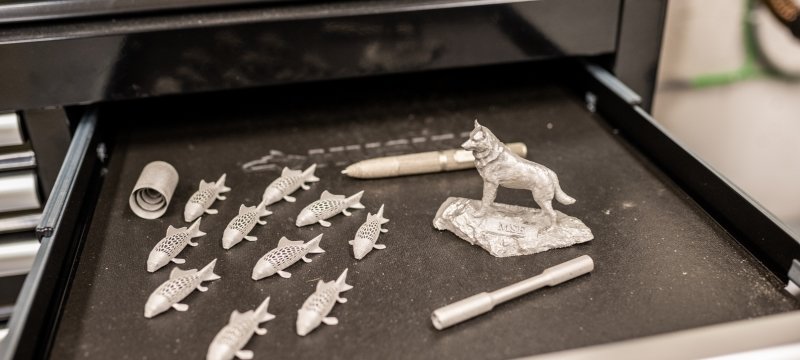
Metallic 3D Printing
Metals
Additive manufacturing of metals is possible, with methods under development.

Microfabrication Shared Facility (MFF)
Facilities that support processing of materials at the micro- and nano-scale, and development of solid state electronics, microelectromechanical systems (MEMS), lab-on-a-chip, and microsystems materials and devices.

Polymer Processing
Polymer
Facilities for the processing of polymers and polymer-based composite materials.